
17-4 PH Stainless Steel Guide: Properties, Heat-Treatment Conditions and Specifications
17-4 PH (1.4542 / AISI 630 / UNS S17400) is the most common precipitation-hardening stainless steel, combining corrosion resistance with high strength gained through aging.
Published: Move Metal
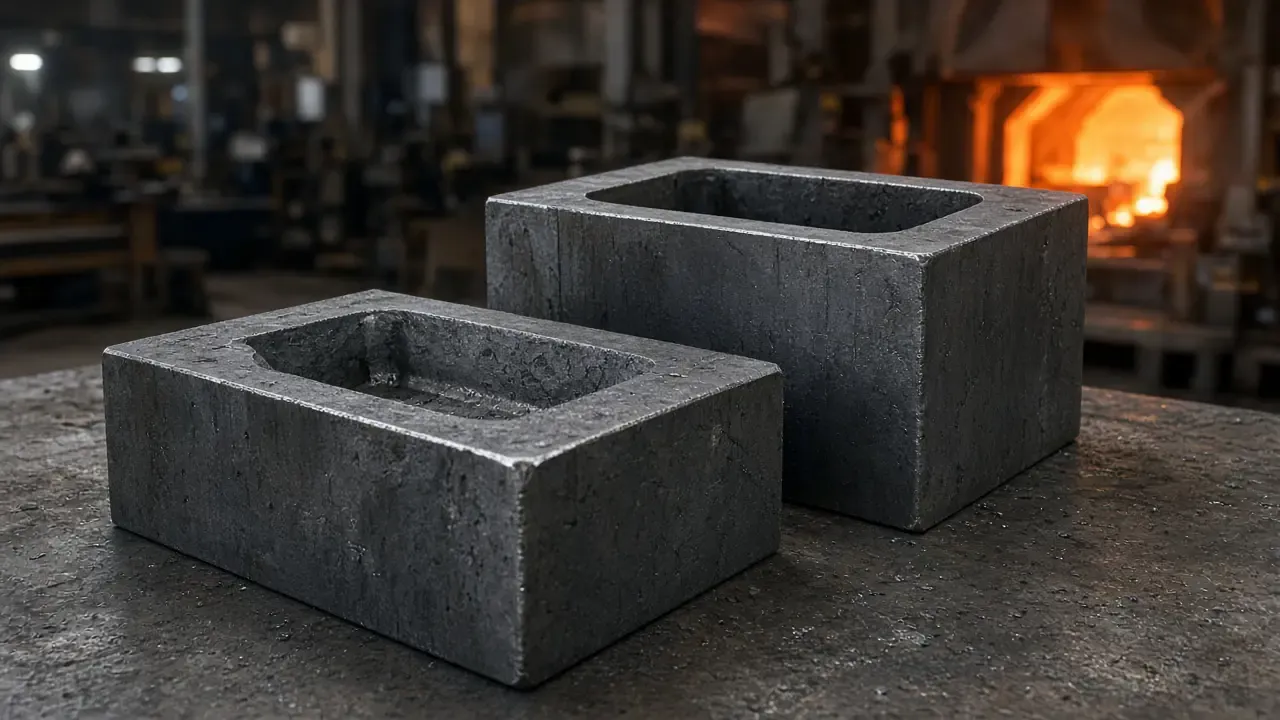
17-4 PH is a martensitic precipitation-hardening stainless steel with approximately 17% chromium, 4% nickel and 3–5% copper. Designations: EN 1.4542 / X5CrNiCuNb16-4, AISI 630, UNS S17400. It is common in aerospace, defense, energy and machinery for parts requiring strength together with corrosion resistance.
Heat-treatment conditions
17-4 PH is typically supplied in Condition A (solution annealed, approx. 33–38 HRC) and aged after machining. The aging temperature (named in °F) defines the mechanical properties:
- H900: Highest strength and hardness (approx. 40–47 HRC), lower toughness.
- H1025 / H1075: Balance between strength and toughness; frequently preferred in aerospace.
- H1150 / H1150M: Higher toughness and ductility, lower hardness; impact and low-temperature applications.
The same bar behaves very differently after different aging treatments, so your request should clearly state the delivery condition and target aging.
Typical specifications
ASTM A564 (bars and shapes), ASTM A693 (plate and sheet), ASTM A705 (forgings), AMS 5643 (bars/forgings, aerospace), AMS 5604 (sheet/plate), EN 10088-3. In aerospace work AMS 5643 and the customer specification are decisive.
Typical applications
Aerospace structural parts and fasteners, jet engine components, hydraulic cylinder and valve parts, pump shafts, defense systems, seawater-exposed ship and submarine parts, chemical plants.
Difference from 15-5 PH and PH 13-8 Mo
15-5 PH is a ferrite-free derivative of 17-4 PH with a cleaner structure and better transverse toughness. PH 13-8 Mo offers higher corrosion resistance and toughness and is usually considered for more critical aerospace parts. Selection depends on the corrosive environment, target strength, section thickness and specification.
What to state in your request
Standard (ASTM A564 / AMS 5643 …), delivery condition (Condition A or aged), target aging (H900, H1025 …), form and dimensions, quantity, testing and certificate requirements (EN 10204 3.1, CoC), origin. This information is the precondition for an accurate quotation.